

Democracy: Navigating the Tensions of Unity and Division
April 28-30, 2026 | Silliman University, Dumaguete City, Negros Oriental
Conference Theme
In the Philippines, Southeast Asia, and around the world, the politics of unity and division have long defined the trajectories of state formation, nation-building, and everyday power struggles. From the forging of postcolonial states to the negotiation of regional alliances, appeals to unity have often been cast as a moral and political imperative. These are manifest in dynamic political activities, ranging from the assertion of national solidarity against external threats to regional integration under international bodies like ASEAN and the EU, or collective action at different levels of society during times of crisis.
Despite these, Unity is rarely neutral and frequently built on selective narratives, practices of exclusion, and the silencing of dissenting voices, leaving questions about who benefits from unity and who is rendered invisible in its name.
Conversely, division is frequently framed as a threat to peace, stability, and progress. It is invoked as the antithesis of harmony and as a justification for authoritarian consolidation. However, history shows that division is not merely a disruptive force. It can be a deliberate tool of governance, enabling elites to fragment opposition, mobilise loyal constituencies, or reinforce social hierarchies.
At the same time, division can serve not only as a reminder from reality that diversity is inevitable. It is also a political resource for change and resistance—fueling movements that challenge the status quo, articulate alternative visions of belonging, or assert the rights of marginalised groups.
This conference invites scholars, practitioners, and activists to examine how unity and division operate as intertwined and dynamic forces in Southeast Asia’s political landscapes, as well as globally. How do ordinary citizens and leaders craft, receive, and respond to narratives of Unity, especially in relation to authority and plurality? In what ways are divisions—ethnic, religious, linguistic, class-based, or ideological—constructed, contested, and institutionalised? How do marginalised communities navigate these tensions, reclaim narratives, and transform exclusion into spaces of empowerment through storytelling, grassroots organising, and everyday acts of defiance?
With this theme, we aim to reframe unity and division not as static conditions, but as evolving processes shaped by historical legacies, shifting authoritarian and democratic practices, transnational flows, international relations, and the pressures of global capitalism. In critically engaging with these themes, the conference aims to create a space for envisioning political futures in which unity does not necessitate conformity, and division can serve as a foundation for pluralism, democratic deepening, and social justice.
The conference seeks to offer a wide range of opportunities for scientific inquiry and critical analysis in the fields of Philippine politics, political theory, comparative politics, international relations, and research methodology. The 2026 International Conference of PPSA aims to convene presentations that explore both the unity and division within Philippine politics and the discipline of political science.
Keynote Speakers
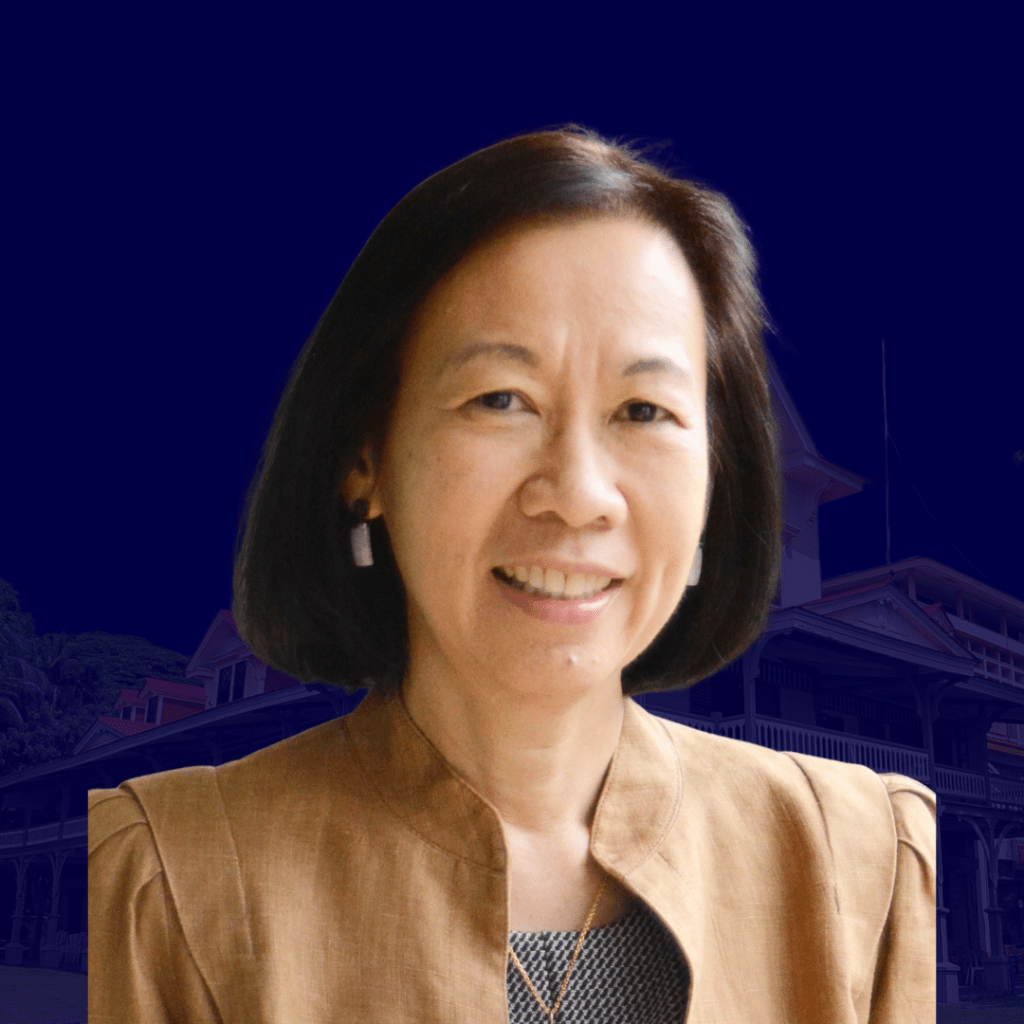
Teresa S. Encarnacion Tadem, Ph.D. is Professor Emeritus of Political Science, University of the Philippines Diliman. Her research work and publications have been on democratization and development with particular focus on social movements, e.g., anti-globalization movements, the Philippine Left, Philippine cooperative movements, non-governmental organizations, global civil society movements and the Philippine technocracy and the Marcos dictatorship. Her studies have been published in the Journal of Contemporary Asia, Philippine Political Science Journal, Asian Politics and Policy, the Pacific Review, Modern Asian Studies, Southeast Asian Studies, SOJOURN: Journal of Social Issues in Southeast Asia, Kritika Kultura and Philippine Studies Historical & Ethnographic Viewpoints among others.
She is editor of Localizing and Transnationalizing Contentious Politics: Global Civil Society Movements in the Philippines. Lexington Press, 2009 and co-editor with Maria Ela L. Atienza of A Better Metro Manila? Towards Responsible Local Governance, Decentralization and Equitable Development. Singapore: Palgrave MacMillan, 2023 and Marxism in the Philippines: Continuing Engagements, ANVIL 2010 with Laura L. Samson.
Among her academic awards include the National Academy of Science and Technology (NAST) 2021 Most Outstanding Book for Philippine Politics and the Marcos Technocrats: The emergence and evolution of a power elite. Ateneo de Manila University Press, 2019, the 2018 NRCP (National Research Council of the Philippines) Achievement Awardee for the Social Sciences (Division VIII) and the Phi Kappa Phi 85th Anniversary Awardees for Excellence for 2018.
She has served as President, Philippine Political Science Association (PPSA), 2011-2013, Chair, Department of Political Science, College of Social Sciences and Philosophy (CSSP), University of the Philippines, Diliman (UPD) 2000-2004, Director, Third World Studies Center, CSSP, UPD, 2004-2010 and Executive Director, University of the Philippines Center for Integrative and Development Studies 2017-2023.
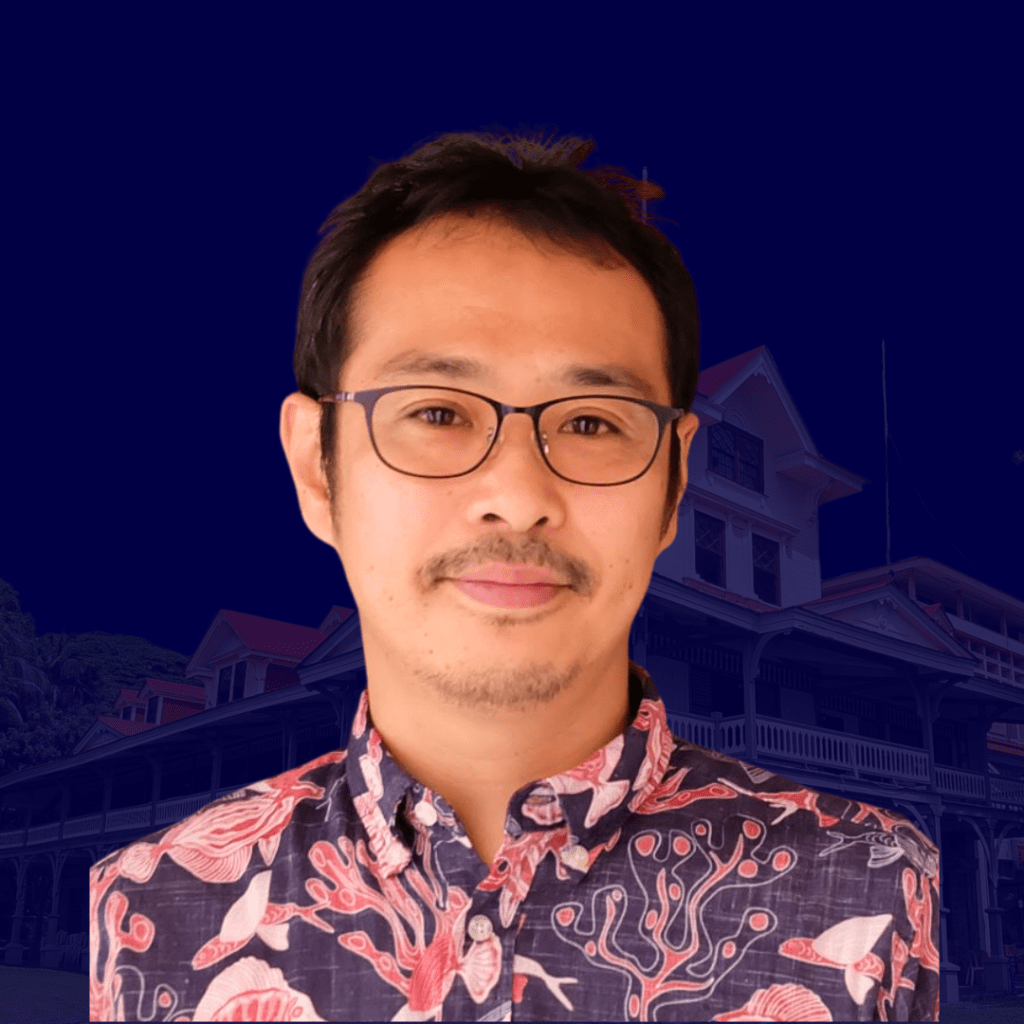
Wataru Kusaka, Ph.D. is Professor at the Graduate School of Global Studies, Tokyo University of Foreign Studies. He earned his Ph.D. in Social and Cultural Studies from Kyushu University and specializes in political science and Philippine studies. His research focuses on moral politics, inequality, governance, and everyday state–society relations in the Philippines, with particular attention to urban poverty, informal politics, and authoritarian populism.
Dr. Kusaka has held academic appointments at Kyoto University and Nagoya University, and has published extensively on Philippine politics and society. He is the author of Moral Politics in the Philippines: Inequality, Democracy and the Urban Poor (2017), and his work has appeared in leading journals and edited volumes, including Philippine Studies, Southeast Asian Studies, and Philippine Sociological Review. His recent research examines Duterte-era governance, fake news and state violence, disaster politics, and moral subjectivities, as well as comparative and ethnographic perspectives on Southeast Asia.
Official Partners
Silliman University
and the College of Arts and Sciences
Silliman University is one of select higher education institutions in the country granted autonomous status by the Commission on Higher Education (CHED). The same government agency has also designated Silliman as a Center of Excellence in Nursing Education and Teacher Education and a Center of Development in Accountancy, Anthropology, Biology and Information Technology Education. It is also one of select universities granted membership with CHED’s Philippine Higher Education Research Network, the higher cluster of universities carefully selected based on strength in research and publications.
The Silliman University College of Arts and Sciences is one of the constituent colleges of Silliman University, a private research university found in Dumaguete City, Province of Negros Oriental, Philippines. Granted Level III accreditation status by recognized accrediting agencies in the Philippine educational system, the College provides undergraduate and graduate instruction in various areas of learning such as in the fields of Anthropology,Creative Writing, English Language, Filipino, History, Literature, Philosophy, Political Science, Sociology, Physics, Chemistry, Biology, Mathematics among others.

Call for Proposals
Paper abstracts should consist of a maximum of 250 words and include research question(s) and research method(s). Panel proposals should also contain a panel description of not more than 250 words, aside from the individual abstracts of the papers included in the panel. Proposals will be peer-reviewed.
Individual appearances are limited to one (1) appearance in the program in each role to maximise participation. No individual may appear more than once in each of these roles: (a) chair of a panel, (b) presenter (principal author), and (c) co-author.
Panel proposals should strive for regional and gender balance and include younger scholars, following the diversity policy outlined in PPSA’s Goals (2023-2025). As such, proposals with all-male panels are not permitted.
Those interested in presenting or convening panels may submit their proposals through this Google Form: PPSA 2026 Proposal Submission Form
Deadlines and Dates to Remember
Call for Proposals (Paper and Panels)
01 October 2025
Extended Deadline for Submission of Abstracts
15 December 2025
Release of Acceptance Notices
15 January 2026
Confirmation of Participation and Registration of Presenters
31 January 2026
Deadline of Payment for Participants
30 March 2025
Release of Book of Abstracts
15 April 2025
Eligibility
Scholars, activists, practitioners, public servants, and public intellectuals from the Philippines, Asia, and other regions are encouraged to participate in the conference.
Conference Fees
All participants, including presenters and role players, must pay the conference fee of PhP 6,000.00. Discounted rates are available for graduate and undergraduate students upon presentation of (1) proof of enrollment and (2) a school identification card. Nominated individuals by institutional members also enjoy a discounted rate.
- For all presenters and role players (includes presenting graduate students): PhP 6,000.00
Discounted rates
- Life-time members (former PPSA presidents): PhP 3,000.00
- Graduate students (non-presenting): PhP 5,500.00
- Nominated individuals of institutional members: PhP 2,500.00
- Undergraduate students (non-presenting): PhP 2,000.00
Further Inquiries
For inquiries, please contact:
Emmanuel L. Alba, The Secretariat, Philippine Political Science Association
E-mail: philpolsci@gmail.com cc. elalba@up.edu.ph
 Philippine Political Science Association