

Reimagining Margins, Reclaiming Borders
2-4 May 2024 | Mindanao State University – Iligan Institute of Technology, Iligan City, Philippines
Conference Theme
With the recent developments in domestic and international politics, the issues of margins and borders again come to the fore. Margins and borders are broadly understood in either spatial or discursive terms. The current material and ideational aspects of understanding politics present certain limitations and thus implore political scientists, social science scholars, practitioners, and other interested parties to re-examine these concepts and ideas.
Why reimagine margins? Relegated in the margins are the peasantry, indigenous people, marginalised genders, religious minorities, and people of different ethnicities, among others. Their issues endure and have morphed together with social developments and technological advancements. Within the country, discussions on self-determination and rule do not end with forming the Bangsamoro Autonomous Region for Muslim Mindanao (BARMM). As the 2025 parliamentary election nears, the quest of the Bangsamoro people for a genuine voice, within and beyond their existing physical spaces, continues. Urban and rural communities grapple with poverty and joblessness amidst rising inflation rates. Marginalised genders face discrimination and persecution from certain sectors of society. Outside the Philippines, diasporic communities of Filipinos struggle to find their place in the new communities abroad. The notion of margins may need reimagining to bring power back to these marginalised peoples.
Why reclaim borders? Cases such as the Chinese aggressions in the West Philippine Sea, the continued invasion of Ukraine, and, more recently, the escalation of the Israeli–Palestinian conflict remain challenging the established notions of national and territorial borders. Domestically, local delineations such as those in the National Capital Region are contested in courts. At the same time, new demarcations are created through legislation to promote harmony in a growing and diverse society. The recent pandemic, through the invisible virus, demonstrated that such constructions of borders are permeable. In the cyber sphere, there are practically no borders to speak of. Social media became the space for conversations (and as sites of disinformation and digital violence) that surpass border controls, despite attempts by states to control its use. All of these have, in one way or another, had a direct impact on people’s lives.
Focusing on reimagining margins and reclaiming borders invites scholars and practitioners to question the existing conceptualisations and understanding in Philippine politics, political theory, comparative politics, international relations, and research methodology. It offers a wide array of possibilities for scientific inquiry and thoughtful interrogation.
The 2024 International Conference of PPSA hopes to bring together papers and presentations that seek to reimagine our understanding of margins and give attention to the debates on reclaiming borders.
Keynote Speaker
Miriam Coronel Ferrer
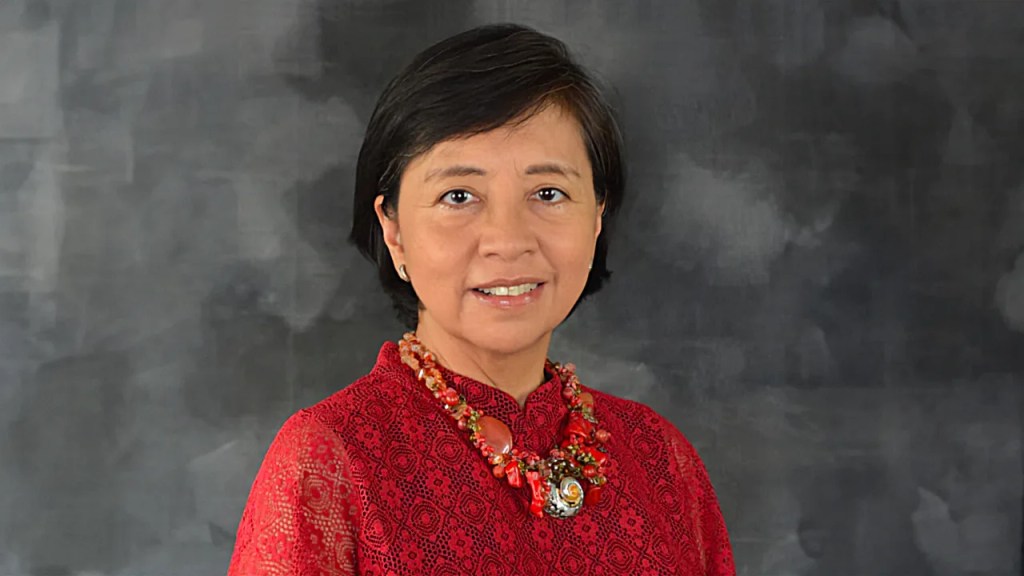
Retirement photo of Miriam Coronel Ferrer from the University of the Philippines Diliman..
Source: Coronel Ferrer’s Facebook profile.
The keynote speaker for the 2024 PPSA International Conference is Professor Miriam Coronel Ferrer, 2023 Ramon Magsaysay Awardee. During Benigno Aquino III’s Administration, she served as the chief negotiator for the Philippines government and signed the Comprehensive Agreement on the Bangsamoro with the Moro Islamic Liberation Front in 2014.
Professor Ferrer was a former Senior Mediation Adviser at the United Nations (UN) from 2018-2021. She is a founding member of the Southeast Asian Women Peace Mediators and a retired professor of political science at the University of the Philippines Diliman.
Partners
Konrad Adenauer Stiftung
The Konrad Adenauer Stiftung is a political foundation, closely associated with the Christian Democratic Union of Germany (CDU).
KAS has been active in the Philippines since the early 1960s, since 1964 to be exact. Ever since 1998, the main activities of the KAS in the Philippines have focused on Social Market Economy, Institutional and Political Reform, and Peace and Development in Mindanao.

MSU-IIT
Mindanao State University – Iligan Institute of Technology is dedicated to academic excellence with a commitment for the holistic development of the individual and the society. Founded in 1968 under the provision of Republic Act (RA) 5363, MSU-IIT is known for its excellence in science and technology and its passion for extensive research and community involvement.
Located in the heart of Iligan City, Mindanao State University – Iligan Institute of Technology has contributed greatly in the development of technology for the city through its ICT office projects and researches.
Philippine Social Sciences Council
The Philippine Social Sciences Council was established in 1968, with the mission of advancing Philippine social sciences and serving as a platform for interdisciplinary dialogue and activities.
PSSC continues to be of service to the social sciences community by giving financial support to its member-organisations in holding their national conferences; provides supplementary funds for the conduct of research and conference presentation abroad; organises training workshops on timely and relevant topics; and recently, established the Social Science Ethics Review Board (SSERB) that promotes ethical standards and practices in social science research.
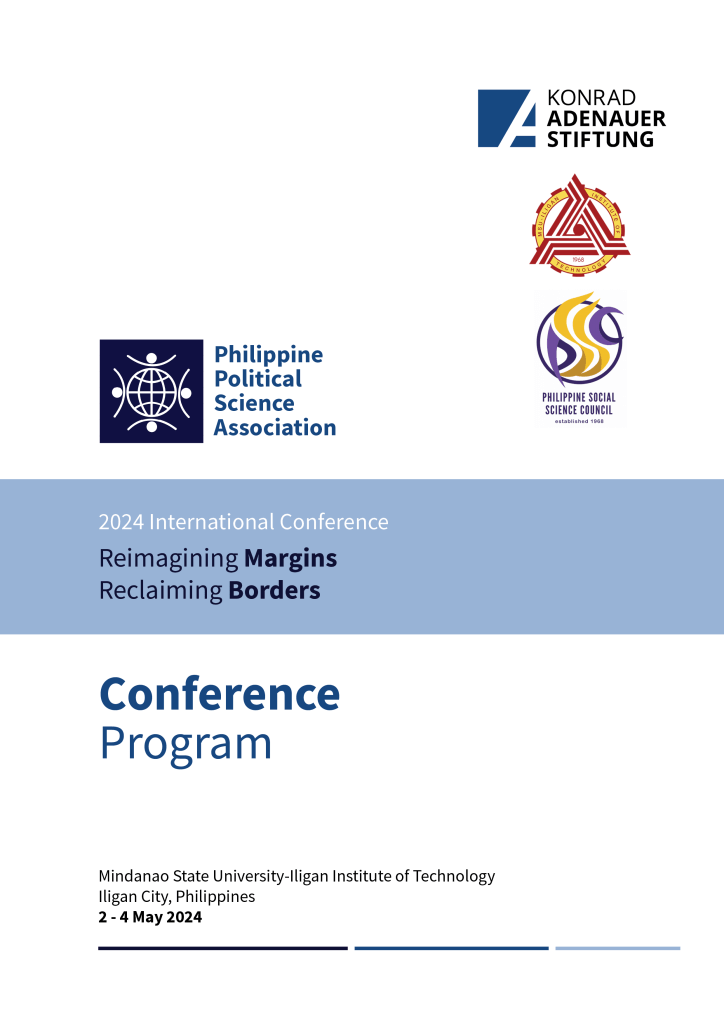
Conference Program and Book of Abstracts
Download the final version of the conference program and book of abstracts below.
Sponsors


 Philippine Political Science Association